In this year, one of my client asked me to design some development boards with different types of microcontrollers, like STM32H753. Recently, they asked me to design a board with a newly released STMicroelectronics’s STM32H5 microcontroller. In my PCB design carrier, I’ve used many different variants of STM32 microcontrollers, including STM32G0, STM32F1, STM32F3, STM32F4, STM32F7, STM32H7, etc. But I never heard of the STM32H5 microcontroller until this client asked to design with it.
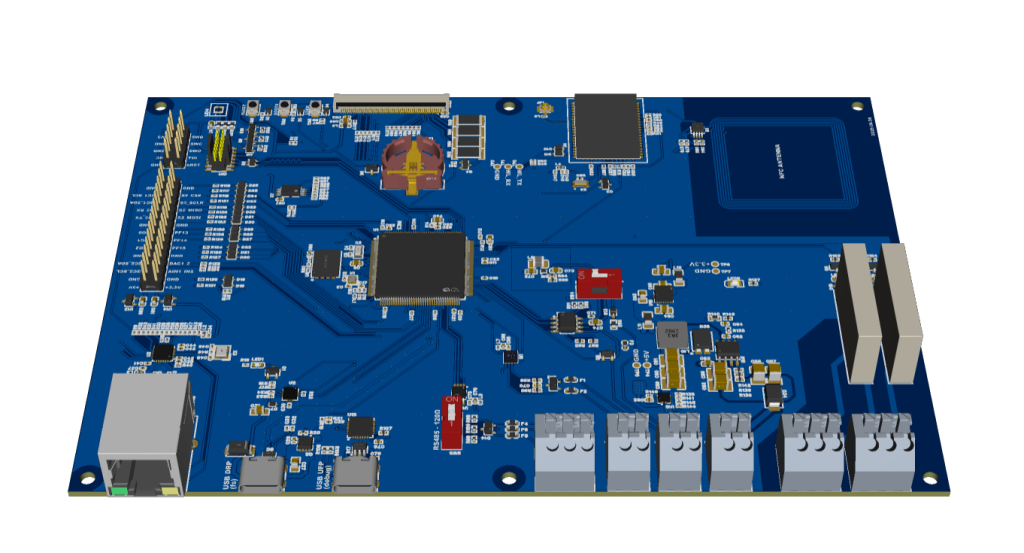
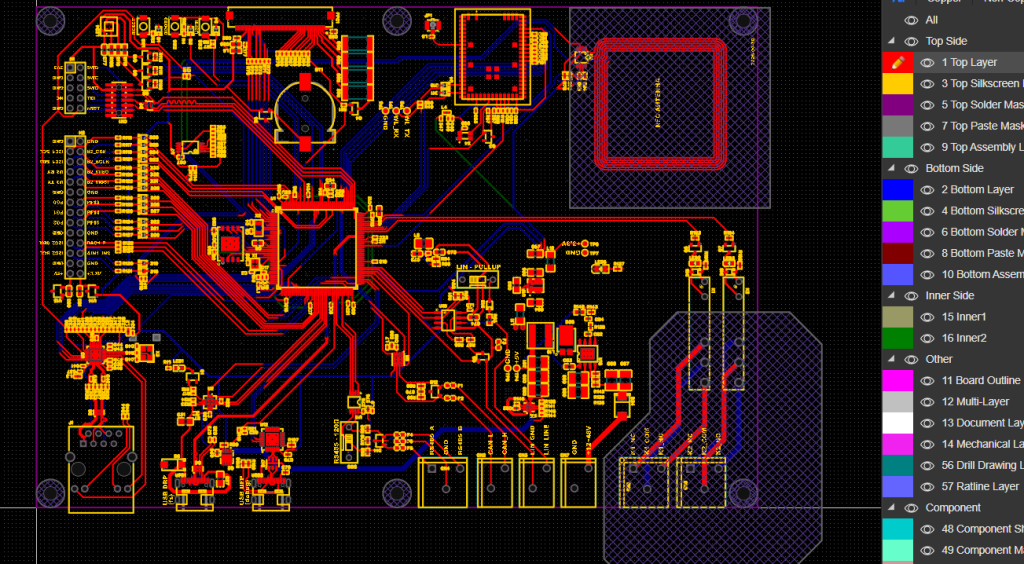
PCB Design
When I was designing this board in July 2026, none of STM32H5 microcontrollers are listed in JLCPCB SMT Part Library, though it is well available there on JLCPCB at this time of writing – September 2026. I discussed this chip supply issue with the client, and they confirmed that they can source the STM32H5 microcontroller and solder it inside their own lab. So, I could proceed designing with the STM32H5 microcontroller without worrying about chip supply issue.
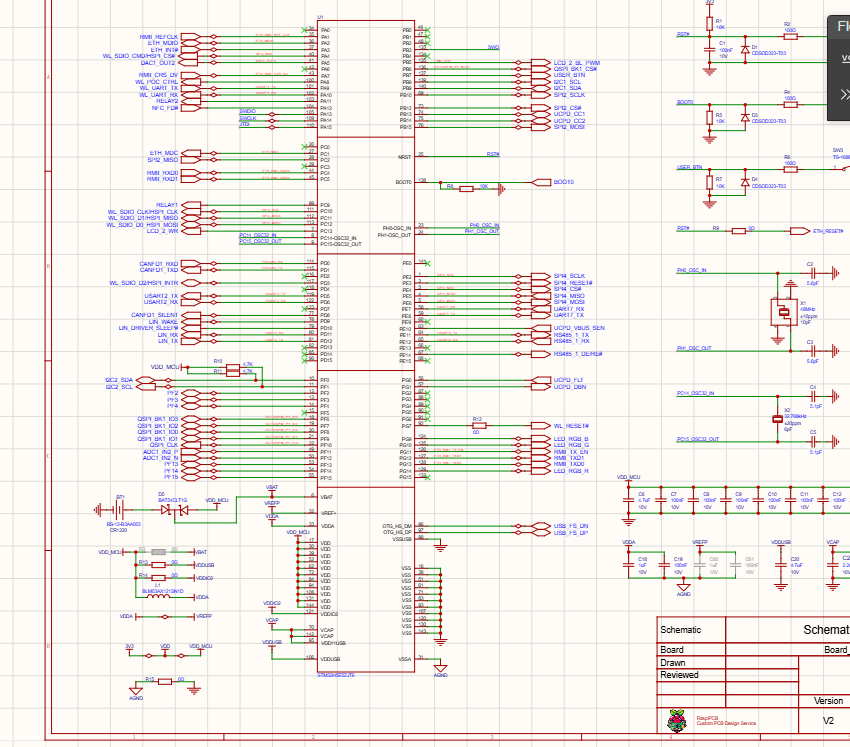
There was only basic package-based symbols in the available libraries, so I started designing from creating my own STM32H5 microcontroller schematic symbol. Below is the custom created symbol for STM32H5E5ZJT6.
The other part of PCB design had no much technical issue, because this new STM32H5 microcontroller was also having excellent compatibility with the other STM32 microcontroller variants. As this board was for development purpose, instead of being a production board, I kept the board size big enough, with exposing several unused IO pins for possible experiments.
PCBA Prototyping and Testing
I did not know this client in person, as I met them on Fiverr. But it looked like they have excellent engineers and good in-house labs. Just after my design work, they used to build the boards by themselves, tested the boards, developed firmware all by themselves, and gave me excellent testing reports.
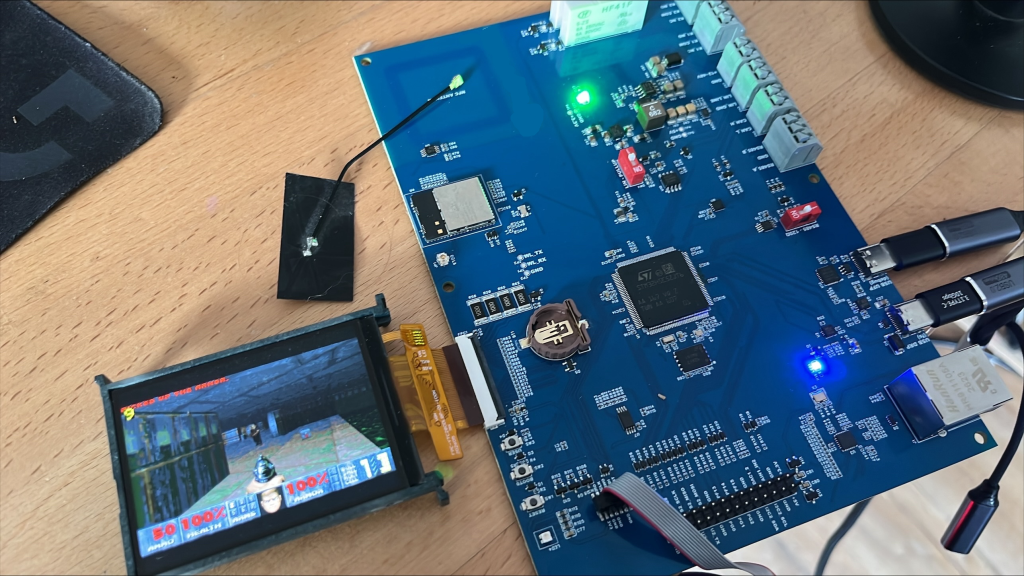
Like always, they made this PCBA prototypes by themselves this time, too. They sourced the STM32H5 chip and soldered it on board, and gave me testing results in less than 2 weeks – that was fast. To my surprise, they reported that the board had no any design bug. The picture at the top of this page is the board under testing on their lab bench, running 3D Doom game on STM32H5 microcontroller.